Postbaccalaureate Licensure in Early Childhood Education
Stonehill's Postbaccalaureate Licensure in Early Childhood Education prepares current educators who already hold a master's degree to create and lead inclusive learning environments for grades PreK–2. It leads to Massachusetts initial licensure in early childhood, PreK–2.
Upcoming Application Deadlines
- Spring Semester: January 1, 2027
- Summer Semester: May 1, 2027
- Fall Semester: August 1, 2027
Earn Your Initial Licensure in Early Childhood Education
The Postbaccalaureate Licensure in Early Childhood Education program prepares teachers to be leaders and critical thinkers. Schools today are complex and diverse communities — reflecting a landscape rich with individual differences. Teachers in our program are prepared using a unique combination of theoretical and practical experiences. This approach ensures their ability to create and lead equitable spaces in PreK–2 classrooms where difference is valued while at the same time preparing them for the realities and challenges of the classroom and the profession.
In the early childhood program, students will:
- develop specialized instructional strategies in early literacy, mathematics, science and social sciences to support the learning and development of children in PreK–grade 2
- design engaging, developmentally appropriate learning experiences that build curiosity, foundational skills and a love of learning in young children
- explore Universal Design for Learning, culturally responsive instruction and inclusive practices to create accessible and inclusive early childhood classrooms
- learn to foster caring, collaborative relationships with young learners, families, colleagues and communities that support children's academic, social and emotional growth
This program includes a mix of in-person and online courses.
Why Graduate Teacher Education at Stonehill
- Focus on educational equity and diversity helps better prepare educators for the modern classroom
- A core of foundational courses ensures our graduates gain the skills to teach all students
- Faculty with well-established expertise in field
- Experiential learning via research, partnership and community opportunities
- Specialized student support framework guides students through program requirements and career preparation
Curriculum Keeps Inclusivity at the Center
Stonehill's graduate teacher education programs include unique and effective courses, programs and opportunities that foster innovation, transformation and leadership. Our curriculum keeps inclusivity central to how we prepare educators for schools, classrooms and community settings.
The 27-to-33 credit Postbaccalaureate Licensure in Early Childhood Education program features a selection of courses designed to prepare educators for initial Massachusetts licensure in early childhood, PreK–2.
This course covers current policy and practice related to English Learners (ELs) in schools with a special focus on Sheltered English Immersion (SEI) Settings. Topics will include diversity issues, content/academic vocabulary development and literacy skills (including listening, speaking, reading and writing) to provide teachers with the knowledge and strategies to support ELs in classrooms.
*May be waived with documented, state-approved sheltered English immersion (SEI) endorsement.
This course examines and unpacks contemporary issues in the field of education and provides prospective teachers with a beginning foundation for understanding the teaching profession and the U.S. education system, including policy and governance. The historical, legal, ethical, and pedagogical foundations for social justice education and democratic education will be explored, as well as the education reform context and emerging policies. The course will include an examination of professional ethics and standards.
Required field experience.
This course explores supportive, preventative, and proactive approaches to addressing the social and academic behaviors of students with disabilities and other diverse populations. Strategies for developing a positive classroom climate to support social and emotional development, including trauma and anxiety, will be central to the learning of the course. A variety of approaches, including the connection between communication & behavior, identifying contributing factors to challenging behavior, FBA, and behavior support plans will be explored.
In this course, teacher candidates will explore the theory and practice of teaching social science, including history, civics and government, and geography to early learners in grades PreK-2. Candidates will learn how to design and implement inclusive social science and history lessons and units that are culturally and linguistically relevant and sustaining. Candidates will learn how to assess early learners in social science and history. Teacher candidates will also evaluate and analyze high-quality curricular materials and will also learn how to utilize primary and secondary sources within the design of lessons.
This course provides teacher candidates with strategies to teach science and technology to early learners in grades PreK-2. Candidates will learn key content knowledge in earth/space science, life science, physical science, and technology and engineering and effective instructional methods for teaching all these areas. Candidates will focus on grounding content learning in phenomena that connects to students’ lives, supporting sense making for students, and providing multiple opportunities and modalities for students to demonstrate understanding of content. Throughout the course, candidates will focus on how to support all students within the classroom by implementing units and lessons that are inclusive and utilize principles of Universal Design for Learning.
This course focuses on the teaching and learning of mathematics in early childhood. Candidates will deepen their understanding of high-quality mathematics curricular materials, mathematical concepts taught in early childhood, and effective instructional practices in grades PreK-2. Candidates will learn high leverage routines in math, problem-based learning, and how to utilize authentic assessment for young learners.
This course provides teacher candidates with strategies for teaching literacy (both reading and writing) to students in PreK-second grade. During this course, teacher candidates will learn research-based methods for teaching early literacy, including developmental stages of writing and how to support students with early writing and content writing. Teaching candidates will explore how to utilize literacy assessments to guide instruction. Candidates will also analyze and evaluate literacy curricular materials and design and implement inclusive literacy lessons into a PreK-2 classroom.
This course focuses on increasing access to the curriculum using the lens of Universal Design for Learning (UDL) to help educators customize instruction to meet the needs of students with disabilities and other diverse learners. Course participants will determine how to deconstruct curricular barriers and create and apply curricular solutions that maximize access and academic success. Assistive technology and AAC will be explored and leveraged.
In this course, teacher candidates will spend the semester within a fieldwork setting aligned with their area of licensure. Teacher candidates will design and implement cross-cutting lessons in their area of licensure and will also have experience evaluating and utilizing high-quality curricular materials, collaborating across the school setting, assessing students’ understanding, and designing individualized plans for students. Teacher candidates will receive targeted feedback throughout the semester from a qualified supervising practitioner and Stonehill course instructor.
The Reflective Seminar is a series of seminars taken concurrently with the practicum. Facilitated by Stonehill faculty and professional education practitioners, this capstone seminar will address current issues of best practice in education. Issues around assessment and evaluation of teaching as well as professional development and teacher support will be addressed.
Graduate clinical licensure capstone. Candidates spend a full semester in a PreK-2 classroom, with at least 100 hours in a PreK-K classroom and at least 200 hours in a grades 1-2 classroom to gain teaching experience while assuming gradual responsibility of the teaching role, culminating with a takeover of all responsibilities of both a PreK-K teacher and a 1-2 teacher.
Upcoming Graduate & Professional Studies Events
-
Virtual Information Sessions
Join us for a virtual information session or drop-in session to learn more about our master’s degree and certificate programs.
-
Cultivating Confident Writers
Join us for a virtual professional development seminar on Thursday, October 8, that explores engaging, research-informed strategies that make writing instruction more effective, purposeful and accessible.
-
Graduate Open House
Join Stonehill Graduate & Professional Studies for an Open House on Saturday, October 24 or November 14, to learn more about our programs and the admission process, receive personalized application guidance, and tour campus.


Studying Education at Stonehill
Stonehill College's graduate teacher education programs prepare educators to lead inclusive learning environments. The College offers master's degree, teacher licensure, community education and graduate certificate program options.
Schools today must strive to be inclusive environments, and educators in our program are prepared to be leaders in creating equitable spaces where difference is valued.
Graduate Teacher Education at Stonehill
Stonehill College's graduate teacher education programs aim to prepare knowledgeable, reflective, caring and flexible educators who embrace learning, scholarship, community and advocacy in their work. Social justice and democratic education are at the center of our work and underpins all programs, courses and experiences. We believe education can disrupt systems and processes that perpetuate injustice and inequity and embrace diversity and individuality as strengths.
We advance our mission by modeling the creation of democratic spaces in the graduate classroom that reflect equitable, accessible and inclusive learning environments where students' voices and perspectives help to shape the construction and the provision of their learning.
Three tenets guide our program philosophy:
- Social justice education
- Democratic education
- Anti-oppressive education
Graduate Teacher Education Program Outcomes
Our graduates:
- Foster care, connection and community with students, colleagues and families
- Promote inclusivity, diversity and equity in educational spaces
- Work to disrupt systems that perpetuate oppression and inequity
- Embrace teaching practices that foster social justice and democracy
- Lead by making education accessible for all learners
- Elevate student voices and perspectives in education
- Act purposefully to continue to learn and contribute to the profession
Rigorous Academics and the Support to Succeed
Stonehill’s graduate teacher education programs recognize the challenges graduate students face in prioritizing work, family, personal and graduate school commitments. Our Graduate Student Support, Access and Success (SSAS) Framework is designed to support students’ success from program start to finish.
Specifically, this approach provides:
- A proactive vs. reactive framework for supporting graduate students’ variable needs within their program
- Clear benchmarks for assessment of candidate readiness
From the admission process to graduation, students have a clear understanding of both expectations and the support available to help them achieve their goals.
Contact Information
Graduate & Professional Studies Admission assists students as they explore graduate and professional opportunities offered at Stonehill College.
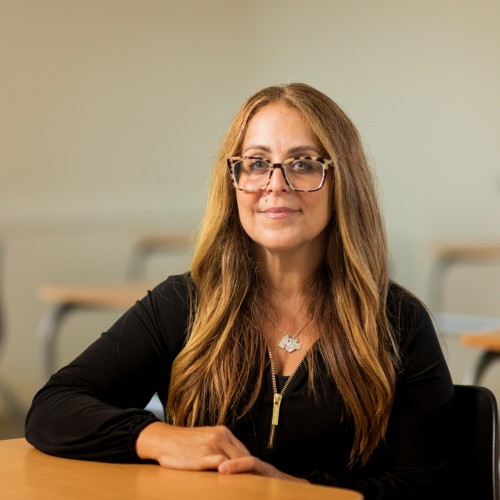
Meet the Director of Graduate Teacher Education