H.O.P.E. Donor Impact Report

Honoring our Neighbor, Organizing for Justice, Practicing Peace, and Encountering God

About H.O.P.E.

The H.O.P.E. Service Immersion program engages students in cross-cultural experiences in both domestic and international locations. This program provides students with an understanding of their role in social justice and gives them the tools and empowerment to make a difference in the world.
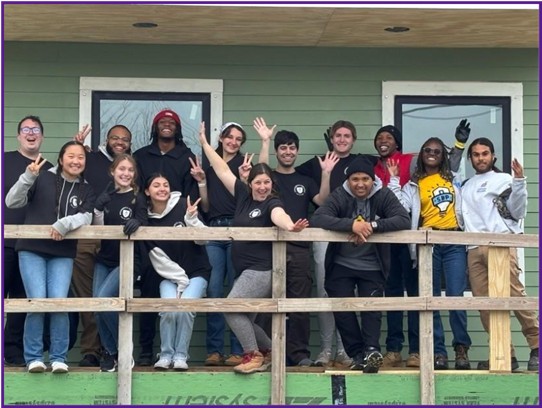
Students in New Orleans, Winter, 2025
New Orleans, Winter, 2025

An education of the heart and mind is paramount in the work of a Holy Cross Education. As a result, the H.O.P.E. Service Immersion Program emphasizes student leaders as educators. Over the past decade, the program has transitioned to one of deeper learning for participants in addition to service and justice work. At this critical point in the country’s history, we are moving into greater education on antiracism and the work of belonging both with leader and student formation.

While learning about social justice, our students must also learn about their own identities so they can approach our receiving communities through a lens of learning and growth. Student leaders engage with a variety of educators who offer diversity of perspective and culture. 

Support of the H.O.P.E. program means giving students who otherwise might not have the financial means the opportunity to participate in this life-changing experience. It provides a lift and a platform to begin a journey of service, growth, and leadership. Their support helps students pursue what they feel called to do and makes meaningful immersion experiences possible.

Oriana Capella '26 and Lucy Frenette '25

Highlights of 2025 H.O.P.E. Experiences

Ossining, New York | Winter 2025

Hunger, Homelessness, & Environmental Sustainability
Students traveled to Ossining, New York, where they stayed at The Center at Mariandale, an organization supporting individuals experiencing hunger and homelessness. While immersed in the community, students learned about environmental sustainability and explored how environmental issues disproportionately impact low-income communities.

In partnership with The Fuller Center for Housing, students assisted with building affordable housing for families who had lost their homes due to natural causes. The organization emphasized sustainable construction practices, including the use of environmentally friendly materials such as blue jean insulation. Students learned about the intersection of housing justice and environmental responsibility.

Haverhill, Massachusetts | Winter 2025

Intellectual Disabilities
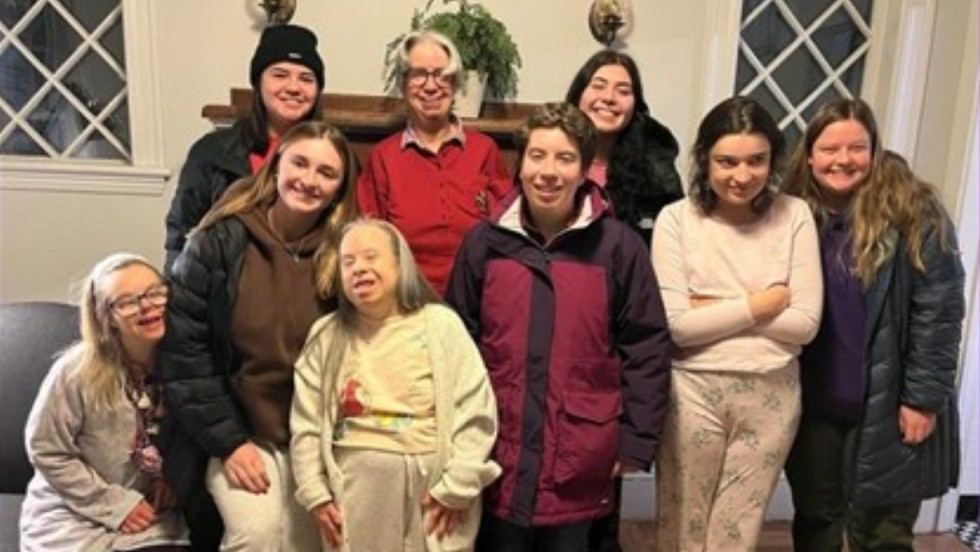
On this immersion trip, students stayed with the L’Arche Boston North community, where they spent time with adults with intellectual and developmental disabilities and the assistants who live alongside them in an intentional community. L’Arche pairs individuals with disabilities with full-time volunteers to create spaces rooted in mutual respect, dignity, and belonging.

Students participated in daily community life, including time in the community kitchen, where individuals with disabilities prepare and serve homemade meals to members of the community. This experience emphasized the importance of honoring the dignity of all people and building authentic relationships.

New Orleans, Louisiana | Winter 2025

Natural Disaster Relief & Racial Injustice
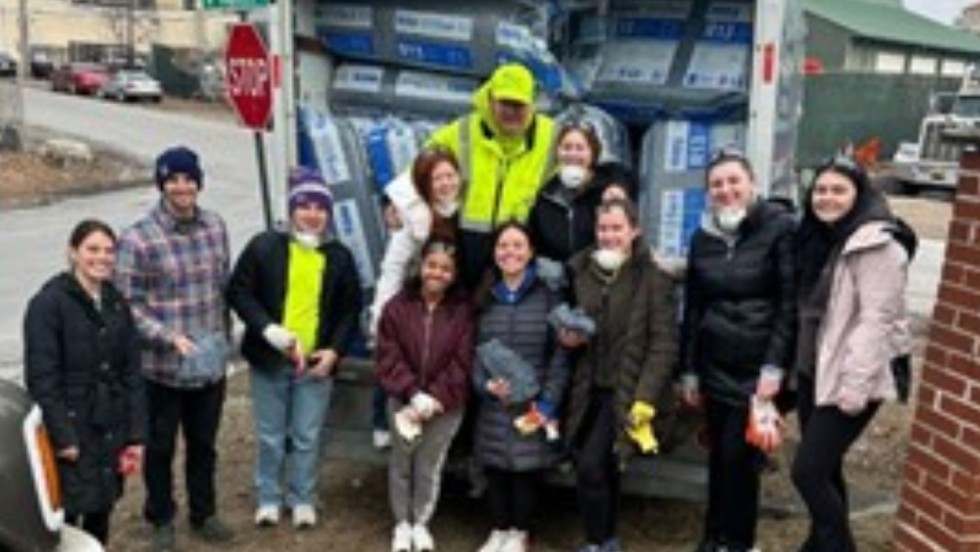
Seventeen years after Hurricane Katrina, New Orleans continues to face the long-term impacts of natural disasters and systemic inequality. On this trip, students partnered with SBP (formerly St. Bernard Project), a national disaster recovery and resilience organization dedicated to shrinking the time between disaster and recovery.

Students assisted with rebuilding homes damaged by hurricanes and the New Orleans East Tornado while learning about the racial injustice and income inequality that persist throughout the city. The group engaged in meaningful conversations about disaster relief, funding distribution, and rebuilding efforts in communities across the United States.

Wheeling, West Virginia | Spring 2025

Rural Poverty, Labor Rights, & Environmental Justice
Students traveled to Wheeling, West Virginia, where they learned about the history and culture of Appalachia, its economic landscape, and the region’s deep ties to the coal industry. Through discussions and site visits, students examined the environmental and social impacts of coal mining and the challenges facing Appalachia through the transition away from fossil fuels.

Students served community members through local charitable organizations and supported rural farms and gardens. Throughout the experience, they explored environmental justice, labor rights, and the underlying causes of rural poverty.

Phoenix, Arizona | Spring 2025

Hunger, Homelessness, & Mental Health Awareness
In Phoenix, students served at Andre House, A House of Hospitality, a center providing compassionate care for individuals experiencing homelessness. Students prepared and served meals, distributed toiletries, and assisted guests in the food pantry and clothing bank.

In the spirit of Br. André, students welcomed every guest with dignity and hospitality while learning about the complex causes of homelessness and the importance of mental health awareness and advocacy.

Portland, Oregon | Spring 2025

Hunger, Homelessness, & Urban Poverty
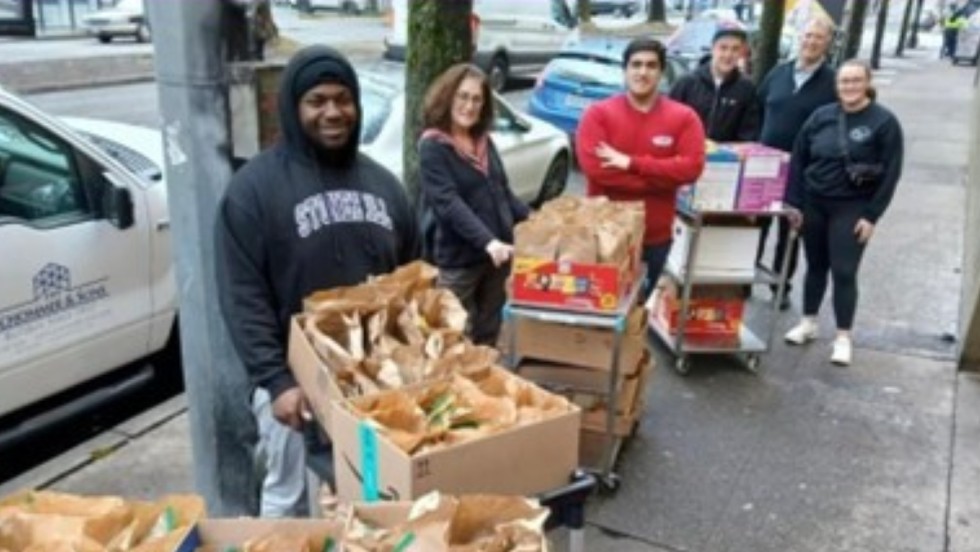
Students served with the hospitality ministry at St. André Bessette Catholic Church in downtown Portland. Through direct service, students witnessed the realities of urban poverty while building community with individuals experiencing hunger, homelessness, mental illness, and recovery from addiction. This experience emphasized compassion, presence, and the transformative power of service rooted in love and solidarity.

El Paso, Texas | Summer 2025

Immigration
Students immersed themselves in the El Paso community through The Encuentro Project, an organization working alongside immigrant shelters such as Casa de Miguel and Annunciation House. During the week, students learned about border policy, the immigration journey, and the historical context of immigration in the El Paso region. By engaging directly with community partners, students deepened their understanding of migration while experiencing the rich cultural heritage of the borderlands.

Santiago, Chile | Summer 2025

Education, At-Risk Youth, & Hunger
Students traveled to Santiago, Chile, where they spent the week with the Congregation of Holy Cross community. The Congregation welcomed students into their ministries serving youth, women, families, the elderly, and other vulnerable populations. Throughout the trip, students learned about Chilean culture and history and visited significant historical and religious sites. The experience connected academics with lived reality, offering students a deeper understanding of social justice issues in a global context.

Reflections from H.O.P.E. participants

Brooke Boucher '27
Brooke Boucher '27

Brooke Boucher, Class of 2027

Field of Study: Psychology and Communication Sciences and Disorders
Hometown: Fairhaven, Massachusetts
H.O.P.E. Service Immersion Site Visited: Santiago, Chile – The House of Formation
Social Justice Issue(s) Addressed: Education, Women’s Needs

Why did you get involved with H.O.P.E.?
I got involved with H.O.P.E. because I wanted to push myself out of my comfort zone, both figuratively and literally. This was my first time traveling out of the country with a group of people I didn’t know. I wanted to learn how to be a global citizen and hoped to grow academically, spiritually, and personally. This experience was not only educational, but truly transformative.

What is your most memorable H.O.P.E. experience?
My most memorable H.O.P.E. experience was spending time at El Comedor, a soup kitchen run by a woman named Marcella. She operates the kitchen almost entirely on her own with the help of a few volunteers, serving meals to community members several days a week. Despite the language barrier, Marcella and I were able to communicate, and she shared something with the Stonehill students that deeply impacted me: “The only difference between us and them is the door.” That statement made me reflect on how similar we all are—we all need food, safety, and care. Her humility and gratitude inspired me to want to pay it forward and give back to both my hometown and the Stonehill community.

What are some of the lasting impacts from your H.O.P.E. experience?
This experience changed how I see myself and my role in the world. I was challenged to confront my own assumptions and grew both emotionally and spiritually. Through this growth, I gained confidence and a deeper sense of humility that I hope to carry with me back home and throughout my time at Stonehill.

Elijah Byrd '27
Elijah Byrd '27

Elijah Byrd, Class of 2027

Field of Study: Communications
Hometown: Canton, Massachusetts
H.O.P.E. Service Immersion Site Visited: The Encuentro Project, El Paso, TX
Social Justice Issue(s) Addressed: Immigration

What Does Donor Support for H.O.P.E. Mean to You?
When donors support the H.O.P.E. program, it means giving students who otherwise might not have the financial means the opportunity to participate in this life-changing experience. It provides a lift and a platform to begin a journey of service, growth, and leadership. Their support helps students pursue what they feel called to do and makes meaningful immersion experiences possible.

Why did you get involved with H.O.P.E.?
I got involved with H.O.P.E. because I was drawn to the ministry aspect of the program. I’m inspired by groups of students going out into the world and ministering to others. I was also excited about the opportunity to serve while fully immersing myself in the culture of the community where I was staying.

What is your most memorable H.O.P.E. experience?
My most memorable H.O.P.E. experience was hiking up Mount Cristo Rey and having a conversation with Hector, who worked with the Encuentro Project. We talked about God and faith, and we helped each other learn by speaking in different languages—he spoke to me in English, and I responded in Spanish. That shared exchange made the experience even more meaningful, as we were not only connecting spiritually but also learning from one another.

What are some of the lasting impacts from your H.O.P.E. experience?
One lasting impact of my H.O.P.E. experience was gaining a deeper understanding of immigration and the many perspectives surrounding it. I also learned the importance of unplugging from distractions and being fully present with the people around me. The trip reminded me how valuable genuine human connection can be.

Ashley Smith '28
Ashley Smith '28

Ashley Smith, 
Class of 2028

Field of Study: Elementary Education and Psychology
Hometown: Harwich Port, Massachusetts
H.O.P.E. Service Immersion Site Visited: Fresh Air Farm, Wheeling, WV
Social Justice Issue(s) Addressed: Environmental impact on the coal mining industry and workers’ union rights; rural poverty

What is your most memorable H.O.P.E. experience?
A memorable experience during H.O.P.E. was one of the last days of the trip when we visited a convent for retired sisters and helped with various service tasks. Afterward, we shared lunch with the sisters. This experience stood out to me because everyone there was so kind and welcoming. Their warmth and gratitude made the day especially meaningful.

What are some of the lasting impacts from your H.O.P.E. experience?
A lasting impact from my H.O.P.E. experience was gaining a stronger sense of place in the world and recognizing how much struggle exists around us. Through this experience, I realized that I want to continue doing service in my own community and in others to help people who are struggling. Not having my phone during the trip also helped me become more present and feel a deeper sense of peace. Being fully in the moment was something I truly appreciated and hope to carry with me.

What was a challenge you had to overcome on your H.O.P.E. trip?
A challenge I had to overcome was that this was my first service trip, and I didn’t really know what to expect. Nightly reflection was also difficult for me at first because it was a completely new experience. It took time to open up and feel comfortable having deep, meaningful conversations with my group, but that growth became an important part of the experience.

Charlotte Crichton '28

Charlotte Crichton, Class of 2028

Field of Study: Environmental Science
Hometown: Beverly, Massachusetts
H.O.P.E. Service Immersion Site Visited: The Center at Mariandale, New York
Social Justice Issue(s) Addressed: Hunger, Homelessness, and Environmental Sustainability

Why did you get involved with H.O.P.E.?
I originally got involved with H.O.P.E. because I wanted to meet new people and make friends who share a passion for service. After my first H.O.P.E. experience, I knew I wanted to continue participating throughout my time at Stonehill because it was both heartwarming and impactful. I also realized how much service can be done in the world, and I wanted to be a part of it.

What is your most memorable H.O.P.E. experience?
The midnight run was my most memorable H.O.P.E. experience because it completely changed my perspective on individuals experiencing homelessness. I realized that people who are unhoused often face circumstances beyond their control. It challenged the assumptions I had been taught—that they were dangerous—and instead I saw how kind and approachable they are.

What are some of the lasting impacts from your H.O.P.E. experience?
Some lasting impacts from H.O.P.E. are that I now view people who are unhoused differently. I recognize their humanity and kindness, and speaking with them made me reflect on my own privilege. It has shaped how I approach social justice and empathy in my everyday life.

Support H.O.P.E.

Gifts to the H.O.P.E. program help reduce program costs so that student participants can focus on the deeper purpose of the service experience.

Make a Gift Learn More About H.O.P.E.