Faculty Member Makes Waves with STREAM Award
Associate Professor Justin Compton’s recently awarded grant will support a project designed to foster environmental literacy and stewardship.
Justin Compton, chair and associate professor of environmental science and studies at Stonehill College, has received a prestigious Solutions Through Research, Education & Art in Massachusetts (STREAM) Award through the Massachusetts Institute of Technology (MIT) Sea Grant Program, funded by the National Oceanic and Atmospheric Administration (NOAA).
STREAM Awards support coastal and ocean-related projects that engage communities and partners in new ways.
“I’m honored and energized to receive this support from MIT Sea Grant and NOAA,” Compton said. “Marine debris is a problem you can see with your own eyes on any Massachusetts beach, and this award allows us to turn that visibility into action.”
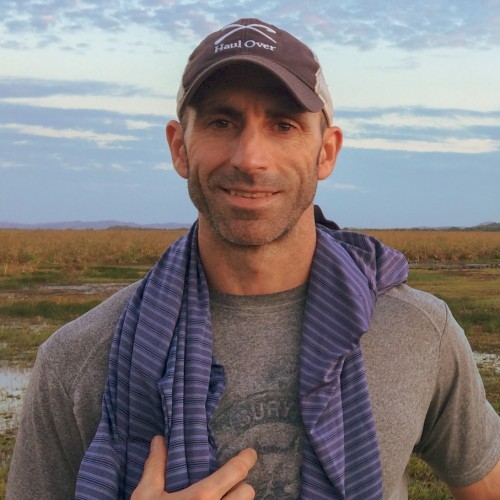
Compton’s grant will benefit “Ocean Cleanup Through Education and Community Engagement.” This project, for which Compton serves as the principal investigator, is designed to engage Stonehill students in coastal cleanups, marine debris tracking, citizen science and environmental photography.
As part of the initiative, it is intended that participants will develop educational resources and community outreach activities, sharing their findings with K–12 classes and local communities through presentations, exhibits and educational materials. The project aims to foster environmental literacy and a deeper sense of stewardship for coastal ecosystems among students and community members alike.
“This project is experiential learning in its truest form,” Compton said. “Our students won’t just read about marine debris—they’ll wade into it, photograph it, track it and then turn that firsthand experience into something the public can use, whether that’s a classroom visit, a photo exhibit or a community cleanup. That combination of fieldwork, reflection and outreach is exactly the kind of learning Stonehill is built around, and I think it’s what will stick with these students long after the project ends.”
Central to the project is a partnership between Stonehill and the Lloyd Center for the Environment in Dartmouth, Massachusetts.
While Compton oversees the project’s overall direction by coordinating coastal cleanups, supervising undergraduate participants, managing K–12 community partnerships, handling reporting responsibilities and more, the Lloyd Center provides hands-on technical support. The organization supports site setup and safety, trains students and volunteers in the use of equipment, helps verify and organize debris data, lends technical guidance on photography and documentation, and handles logistics at community events tied to the project.
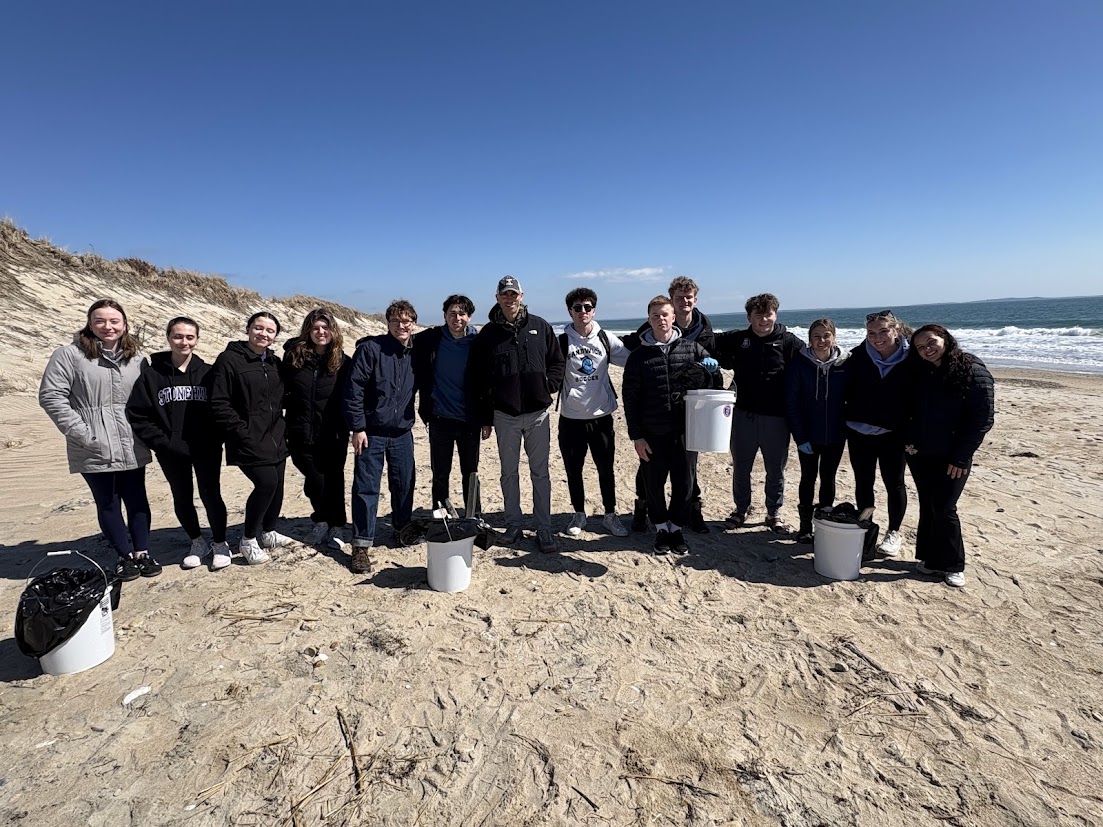
“It’s a genuine division of labor built on complementary strengths,” Compton said. “Stonehill brings the students and the academic framework, while the Lloyd Center contributes environmental and field-based technical expertise along with its established outreach network in the region. Together, they ensure our data and our students’ training meet a high standard. Neither piece works as well without the other.”
Hamza Malik, director of research programs and strategic partnerships at the Lloyd Center and instructor of environmental science and studies at Stonehill, is the chief liaison between the two organizations.
“What excites me most about this collaboration is the opportunity to integrate hands-on coastal research with impactful education and community engagement across both formal and informal learning environments, including classroom and field experiences,” Malik said. “From the Lloyd Center’s perspective, we are eager to host Stonehill students at our sites and collaborate with them to engage K–12 students, developing educational programs that are shaped by students for students. We view this as a significant opportunity to advance environmental literacy, experiential learning and a deeper sense of stewardship for our coastal ecosystems.”
-

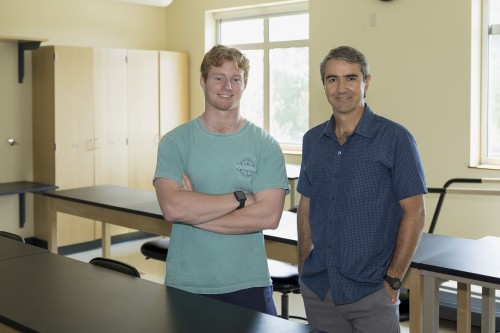
Tracking Mental Health Through Movements
Biology major conducts research exploring how everyday behaviors can shape emotional well-being
-
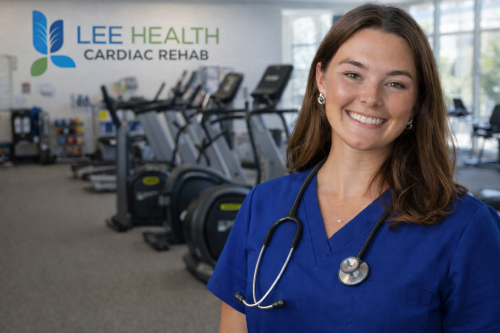
Extensive Internship Program Provides Career Clarity, Networking
Stonehill's emphasis on internships empowers students to understand and drive their own career paths — from their first days here to long after graduation.
-
Exploring the Intersection of Parkinson’s and GPL-1RA Drugs
A Stonehill neuroscience professor and three students conduct research exploring how these drugs increased dopamine production pathway in Neuro2A cells.